
In a world shaped by technological progress and innovation, STEM education—encompassing Science, Technology, Engineering, and Mathematics—has become a vital foundation for the next generation. While many schools emphasize these subjects in the curriculum, traditional teaching strategies often miss the mark in captivating young imaginations. More dynamic solutions are needed to ensure all children, regardless of background or interests, can confidently explore and excel in STEM fields. Many forward-thinking parents and educators are turning to creative, activity-based models where learning becomes a hands-on adventure. Notably, options like a children education franchise can provide structured yet imaginative environments where young learners thrive, supporting schools by bridging the gap with after-school or extracurricular STEM activities.
As children navigate a world rich in science and technology, sparking an early passion for these subjects is essential. When STEM learning is fun, accessible, and connected to everyday experiences, kids develop critical thinking, resilience, and a genuine interest in discovery. Through art-inspired robotics or kitchen-table engineering projects, children can unlock a lifelong love for analytical and creative problem-solving.
Integrating Art into STEM Education
Broadening the appeal of STEM requires inventive tactics that embrace creativity alongside technical learning. Students engage their full spectrum of talents and interests by integrating art, transforming STEM into STEAM. Projects like ArtBots, simple robots that draw or paint, merge creativity with engineering, challenging kids to think like designers and builders. These STEAM projects have proven instrumental in making the STEM approachable for populations historically underrepresented in technical fields, notably girls and students from underserved communities. Melding artistic elements sparks enthusiasm and an inclusive spirit within STEM spaces, widening participation and building confidence among all students. Recent research on the success of programs using hands-on, art-enhanced robotics supports the notion that learning is most effective when connecting students to practical and imaginative pursuits.
Hands-On Learning with Everyday Materials
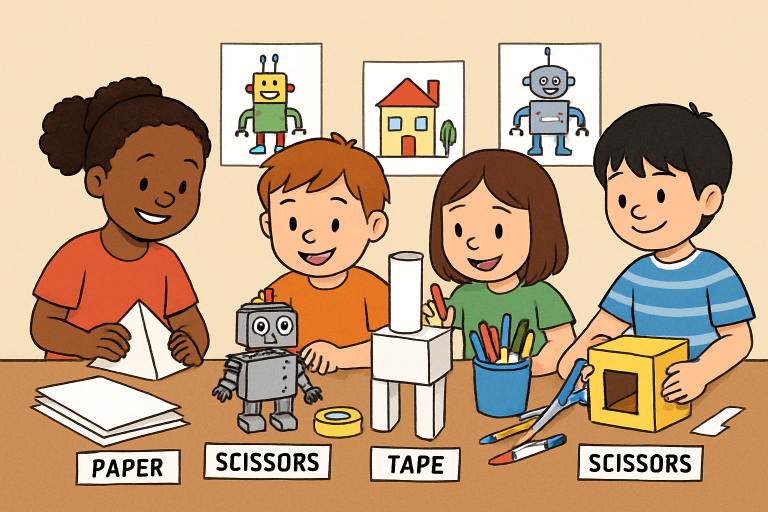
Creative STEM learning doesn’t require expensive, specialized kits. Some of the best learning experiences emerge from projects engineered with basic household items. For example, constructing a paper roller coaster illustrates momentum and gravitational force, while building a sundial from a stick and rocks reveals Earth’s rotation and time measurement. These low-cost, high-engagement projects demystify abstract scientific concepts, allowing children to test, observe, and refine their understanding through real-world application. This tactile approach to STEM benefits all ages, and science educators widely recommend it for developing critical thinking and promoting self-guided experimentation.
Encouraging Problem-Solving at Home
Parents and caregivers can transform daily moments into rich problem-solving opportunities. Involving kids in simple household challenges—such as creating an upside-down soap dispenser to reduce waste or designing an efficient storage solution—inspires practical application of STEM skills. This collaborative process demonstrates how science and engineering empower kids to improve their environment, reinforcing that STEM is not confined to textbooks but is integral to everyday life. According to guidance from parents and educational experts, authentic challenges foster deeper engagement and maturity in children’s reasoning abilities.
Leveraging Technology and Interactive Platforms
Digital learning platforms open up a world of possibilities for STEM education, especially for today’s tech-savvy children. These tools create immersive environments where kids can solve engineering challenges, conduct virtual experiments, and explore space and natural sciences in interactive ways. By complementing hands-on activities, they support self-paced learning and cater to diverse learning styles. Features like interactive apps, virtual labs, and coding games make education more accessible and engaging, offering the instant feedback that young digital natives thrive on. This dynamic approach sparks curiosity and builds the technical fluency children need to confidently navigate a digital future.
Fostering Collaboration and Social Skills
The modern STEM workplace is naturally collaborative, and nurturing teamwork in early education sets the stage for later success. Group projects such as building bioinspired robotic blimps or conducting team-based science experiments teach students to communicate, delegate, and combine strengths. These collective experiences help children build social and leadership skills alongside their scientific knowledge. When they work together to troubleshoot and innovate, students learn not just the mechanics of STEM but also how to listen, compromise, and value diverse perspectives—an essential preparation for real-world professional environments.
Conclusion
STEM education comes alive when woven into the stories, art, problems, and technology that shape children’s daily lives. Inviting curiosity, creativity, and collaboration into STEM classrooms and homes lays the foundation for resilient, inventive, and adaptable thinkers. By embracing a holistic and hands-on approach, parents and educators give children more than academic skills—they empower them to shape the world they will inherit.