
Introduction
In today’s competitive retail landscape, customer expectations are higher than ever, with shoppers demanding faster service and more personalized experiences. Traditional checkout methods, while familiar, often struggle to keep pace with these evolving demands. Retailers are turning to technology-driven innovations that meet modern needs without sacrificing service quality to remain relevant. As retailers face increasing pressure to deliver seamless, efficient, and enjoyable in-store interactions, attention is rapidly focusing on reinventing the checkout process. Speed, convenience, and customer empowerment shape next-generation experiences, while advanced technology disrupts old paradigms. As a self-service kiosk becomes common in stores nationwide, businesses find new solutions to streamline checkout, reduce friction, and create environments where shoppers feel in control.
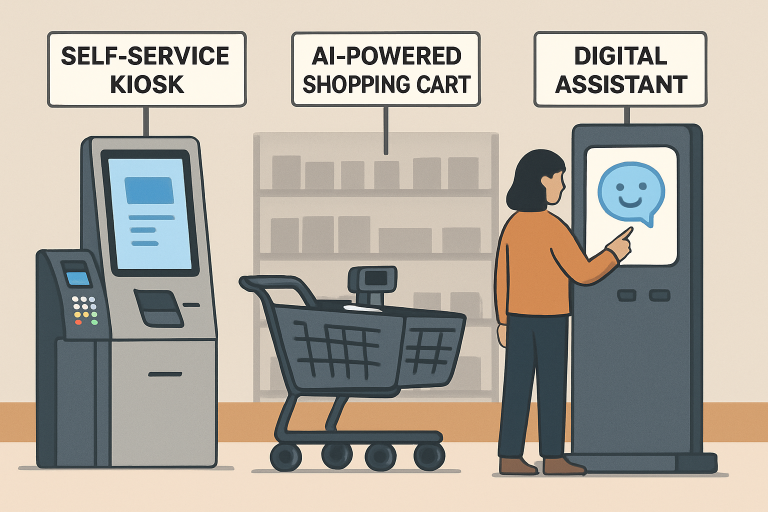
From self-service kiosks to AI-enabled carts, the drive to automate and modernize checkout enhances customer convenience and tackles operational challenges such as labor shortages and security issues. Retailers must balance efficiency with security, while ensuring that customers—regardless of their technological literacy—feel supported. The shift toward digital, staffless, and intelligent systems redefines how customers conclude their purchasing journey in physical stores.
The Evolution of Self-Checkout Systems
Self-checkout solutions have been part of the retail landscape for decades, promising shorter lines and lower labor costs. Over time, adoption has accelerated, especially as consumers become accustomed to digital convenience and contactless transactions. Yet, the proliferation of self-checkouts has exposed flaws, chief among them, heightened theft and customer frustration with glitches, slow interfaces, or complex item codes.
Retailers such as Walmart and Target are actively reevaluating their self-checkout approaches. Some have rolled back these systems in high-shrink locations after discovering alarming losses and customer complaints. According to an Associated Press report, certain major chains have seen theft rates under self-checkout systems nearly double compared to staffed lanes, sparking a renewed focus on loss prevention and customer service training.
The Rise of Cashierless Stores
Cashierless stores have emerged as the boldest step forward in pursuing ultra-convenient retail. Using technologies such as computer vision, shelf sensors, and AI, these stores enable shoppers to ‘grab and go’ without stopping at a traditional checkout. Amazon’s “Just Walk Out” pilot, now adopted across select U.S. grocery and convenience locations, exemplifies this approach. Shoppers enter, retrieve items, and leave, while their accounts are seamlessly charged in the background.
Despite initial excitement, the model presents its operational hurdles. Implementation is costly, and false positive theft alerts and technical hiccups have caused growing pains. Retailers must weigh the appeal of staffless convenience against technical complexity and customer reassurance, learning from high-profile setbacks as they refine these systems. Coverage by the Financial Times highlights ongoing debates about shoplifting risk and the current limitations of AI-driven security.
AI-Powered Shopping Carts
Smart shopping carts bring technology directly to the consumer’s fingertips. Outfitted with sensors, weight scales, touch screens, and payment modules, these carts instantaneously tally products as shoppers add them, display running totals, and support card or digital wallet payments. For retailers, these devices can drive basket size by suggesting upsells and streamline inventory insight in real time.
Leading grocery chains such as Kroger have piloted systems like Caper Cart and others, reducing time in checkout lines and delighting tech-savvy customers. Smart carts minimize friction and improve personalization and accessibility. Industry analysis by CNN Business indicates that these technological leaps could soon be a common sight as cost-effectiveness and shopper familiarity improve.
Digital Assistants in Retail
In-store digital assistants—whether app-based or physical kiosks—offer personalized customer service on demand. These assistants handle various tasks, from product recommendations and wayfinding to pre-ordering and facilitating payments. Some operate as conversational chatbots, while others guide consumers through interactive touchscreens.
Studies show that digital assistants can significantly boost satisfaction and operational efficiency. By automating routine queries and guiding customers based on their preferences, these tools free up staff for more complex or sensitive interactions, creating a more supportive retail environment. This review on digital assistants in point-of-sale environments provides further insights.
Balancing Technology and Human Touch
Retailers have learned the hard way that innovation alone doesn’t guarantee satisfaction. While many shoppers relish speedy, autonomous shopping, a substantial segment still values human interaction. Recognizing this, leading brands are reintroducing staffed checkouts and hybrid models—empowering customers to choose between tech-driven convenience and personalized service. International retailer Itsu, for example, has refined its self-service approach after observing that retaining staff for complex needs delivers higher satisfaction and loyalty.
Retailer stories on sites like the Financial Times, where many brands highlight the need for balanced automation to drive optimal business results, support the wisdom of blending automated systems with a visible, engaged staff presence.
Conclusion
Retail checkout is undergoing a transformative shift, merging AI, advanced sensors, and human expertise to create a smoother, more personalized customer experience. As the industry moves toward frictionless transactions, tools like self-service kiosks, smart shopping carts, and AI-powered digital assistants are becoming key elements of retail strategy. These technologies aim to reduce wait times, improve efficiency, and deliver tailored recommendations, enhancing convenience for modern shoppers. However, the retailers best positioned for long-term success will balance innovation with adaptability, offering technology-driven efficiency while maintaining meaningful human interaction. Rather than replacing personal service, the focus will be on integrating solutions that enrich everyday lifestyles, foster trust, and keep customers engaged. By blending cutting-edge tools with attentive support, retailers can meet evolving expectations without losing the warmth and connection central to the shopping experience.